The Genius That Lives in Doing Absolutely Nothing
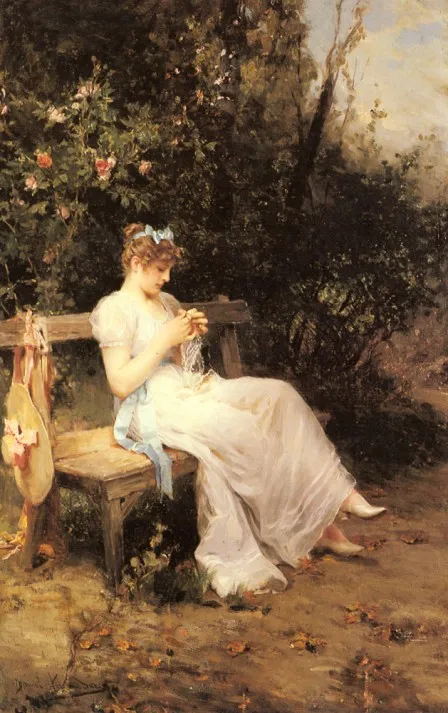
Photo: Daniel Hernández Morillo, Public domain, via Wikimedia Commons
Your Brain Has a Secret Mode You Keep Interrupting
There's this moment — maybe you've had it — where you're in the shower, or spacing out on the highway (safely, obviously), or just lying on the couch staring at the ceiling fan, and suddenly: an idea. A good one. Maybe a great one. The kind that makes you scramble for your phone to write it down before it disappears.
And then you go back to your desk and grind for six more hours and produce... nothing worth keeping.
This is not a coincidence. It's neuroscience. And it has some pretty inconvenient implications for the hustle culture that most creative people in the US have been swimming in for the better part of a decade.
The short version: your brain does its most interesting creative work when you're not actively trying to do creative work. And we've been conditioning ourselves to interrupt that process constantly.
What's Actually Happening in Your Head When You Zone Out
Neuroscientists call it the default mode network — a set of brain regions that activate when you're not focused on a specific task. For a long time, researchers thought this network was basically the brain idling, like a car at a red light. Turns out, they were very wrong.
The default mode network is where your brain makes connections between things that don't obviously belong together. It's where it processes emotions, integrates memories, imagines future scenarios, and — crucially — generates the kind of nonlinear, associative thinking that creative breakthroughs are made of. It's not your brain doing nothing. It's your brain doing something you can't consciously direct.
Here's the catch: this network only really kicks on when your task-focused attention network is offline. Which means every time you grab your phone, every time you fill a quiet moment with a podcast or a scroll, every time you hustle through your lunch break — you're essentially blocking the signal.
You're too busy being productive to let your brain be creative.
The Hustle Myth and Why It Hits Differently for Creatives
For people in traditional nine-to-five jobs, the separation between work and not-work is usually pretty clear. But creatives? The line is a mess. When your passion and your livelihood are the same thing, rest can feel like abandonment. Like you're falling behind. Like everyone else is out there making, posting, pitching, growing — and you're just... sitting there.
The content economy makes this worse. When your output is your income, downtime has an opportunity cost you can practically calculate. Every hour you're not creating is an hour you're not posting, not growing your audience, not staying relevant. The anxiety is real and the pressure is real.
But here's what that pressure costs you: access to your own best thinking.
The creators who sustain long careers — not just hot streaks, but actual longevity — almost universally talk about the importance of filling the well. Of reading widely, walking aimlessly, traveling slowly, sitting with questions without rushing toward answers. That's not them being precious about their process. That's them protecting the conditions under which good work actually gets made.
Boredom Is a Different Thing Than Rest
It's worth drawing a distinction here, because they're not quite the same.
Rest is passive recovery — sleep, stillness, letting your nervous system downshift. That's essential and chronically underrated. But boredom is something slightly different. Boredom is the experience of having nothing to engage with — no stimulation, no task, no input — and sitting with that discomfort instead of immediately filling it.
That discomfort is actually the point. It's the friction that starts the engine.
When researchers have studied boredom in creative contexts, they've found something interesting: people who are allowed to be bored before a creative task consistently outperform people who are kept stimulated. The boredom doesn't drain them — it primes them. It sends the brain looking for something interesting to do, and in the absence of external input, it starts generating its own.
This is why the shower is such a reliable idea factory. Warm, monotonous, no screen, nothing to read, nothing to respond to. You're basically forcing your brain into its creative default mode whether it wants to go there or not.
Building 'Nothing' Into Your Practice (Without Losing Your Mind)
Okay, so how do you actually do this without feeling like you're wasting your life?
Start small and start intentional. You don't need a week-long retreat in the mountains (though honestly, if you can swing it). You need pockets of genuine unstructured time built into your week — and you need to protect them from being colonized by productivity.
The phone-free walk. Not a podcast walk. Not a phone call walk. Just a walk. Ideally somewhere with some visual interest — a neighborhood you don't usually go through, a park, anywhere that isn't your apartment. No destination. No agenda. Twenty minutes minimum.
The analog morning. Before you open any app or check any notification, give yourself fifteen to thirty minutes of low-stimulation time. Coffee. Journaling with actual paper. Staring out the window. Let your brain wake up on its own terms before the internet gets to it.
The boring commute. If you drive or take public transit, try one trip a week with no audio. No music, no podcast, no audiobook. Just the ambient noise and your own thoughts. It will feel uncomfortable at first. That discomfort is the process working.
The permission to daydream. Literally schedule it. Block twenty minutes on your calendar labeled "thinking time" or "nothing time" or whatever you need to call it to feel okay about it. Use it to sit somewhere without a task and let your mind wander. You are not wasting time. You are doing the creative work that the other work depends on.
What Comes Back When You Stop Filling Every Silence
The first thing most people notice when they start protecting their unstructured time is how loud their own thoughts are once they stop drowning them out. That can be uncomfortable. Sit with it anyway.
The second thing they notice — usually within a few weeks — is that ideas start showing up differently. More fully formed. More surprising. The kind that feel like they came from somewhere outside you, even though you know they didn't.
That's the default mode network doing what it does best. That's your brain making the connections it couldn't make when you were busy being busy.
The grind has its place. Execution matters. Showing up to the work matters. But the work doesn't live in the grind. It lives in the quiet spaces around it — the ones we keep paving over because we forgot that doing nothing is, sometimes, the most creative thing we can do.