The Burnout That Sneaks Up on You: When You're Exhausted by Work You Actually Love

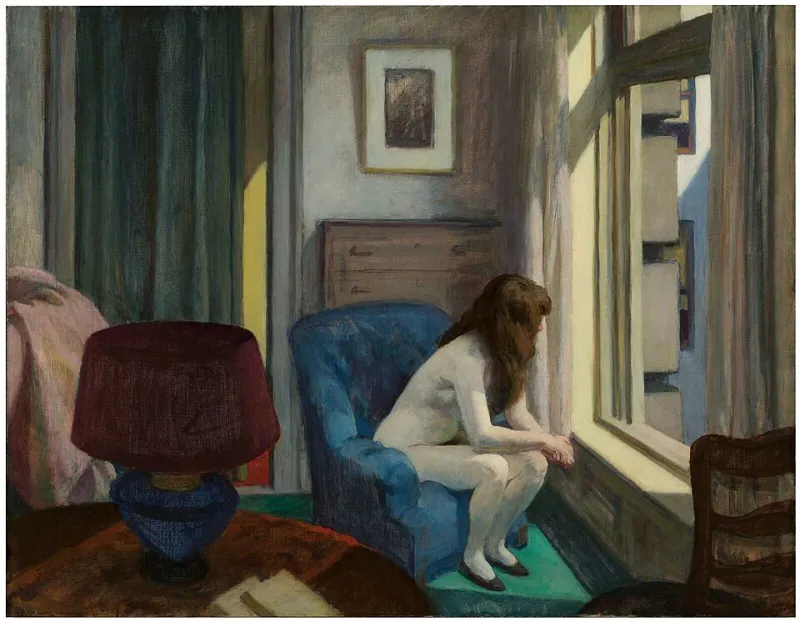
Photo: Shixart1985, CC BY 2.0, via Wikimedia Commons
There's a particular kind of tired that doesn't make sense on paper.
You're not overworked — or at least not dramatically so. You're doing creative work, which is what you wanted. You might even be getting paid for it, which is the dream, right? But something feels off. The projects that should be energizing feel like a slow drain. You finish a piece and feel nothing. You open a blank canvas or a new document and notice a heaviness that you can't quite name.
If you've been there, you've probably blamed yourself. Assumed you were being ungrateful, or lazy, or that you just needed a vacation. Sometimes those things are true. But sometimes — and this is what doesn't get talked about enough — the exhaustion isn't about how much you're doing. It's about what you're doing, and whether it actually aligns with who you are.
Two Different Kinds of Creative Tired
It helps to draw a real distinction here, because they require completely different responses.
The first kind of creative burnout is the one most people picture: you've taken on too much, your schedule has no breathing room, you haven't had a day off in weeks, and your brain is simply depleted. This is capacity burnout. The fix, while not always easy, is relatively straightforward — rest, boundaries, scaling back, protecting time.
The second kind is trickier. This is what happens when the volume of work is manageable, but something about the nature of the work is quietly wrong. Maybe you're a writer producing content that's technically in your wheelhouse but that you find intellectually empty. Maybe you're a designer executing briefs that conflict with your aesthetic values, project after project. Maybe you started a creative business around something you loved and the market shaped it into something you no longer recognize.
This second kind of burnout doesn't respond to rest. You can take a full week off and come back feeling just as hollow. That's actually one of the clearest signs you're dealing with misalignment rather than depletion — the exhaustion persists even when the workload doesn't.
Why Passion Projects Can Still Feel Wrong
Here's the part that really confuses people: this kind of burnout can happen even with work you chose freely, work you're proud of on the surface, work that other people admire.
Passion and alignment aren't the same thing. You can be passionate about photography and still feel drained if every project you're taking on is in a style or context that doesn't reflect your actual vision. You can love writing and still feel hollow if everything you're producing is calibrated for an audience rather than emerging from a genuine place.
Psychologists who study motivation often distinguish between intrinsic and extrinsic motivation — doing something because it's internally meaningful versus doing it for external rewards like money, approval, or status. Creative work that's driven primarily by external validation, even when it started from a place of genuine love, tends to become unsatisfying over time. Not because the external rewards aren't real, but because they can't fully substitute for the feeling of making something that actually reflects who you are.
When your creative output starts drifting away from your values — slowly, gradually, often in ways that each individually seemed reasonable — you can end up far from where you meant to be. And that distance has a physical and emotional cost.
Recognizing the Signs Mid-Course
Misalignment burnout tends to announce itself in specific ways. A few things worth paying attention to:
You're dreading the work before it starts, not just during hard stretches. Every creative project has frustrating moments. But if the dread shows up before you've even opened the file, that's information.
You feel relief when projects fall through rather than disappointment. This one is subtle but telling. When a gig you thought you wanted gets canceled and your first emotion is something like quiet relief, your gut is trying to tell you something.
You're creating work you wouldn't show someone you deeply respect. Not because the quality is low, but because it doesn't represent you. There's a difference between imperfect work and work that feels like a costume.
You can't articulate what you're working toward anymore. When someone asks about your creative direction and you find yourself describing what you have been doing rather than what you actually want to be making, that gap is worth examining.
Recalibrating Without Burning Everything Down
The instinct when you recognize misalignment is often to make a dramatic change — quit the client, scrap the project, pivot entirely. Sometimes that's the right call. But often, the more useful first step is just getting honest with yourself about what the actual disconnect is.
Start by asking: What did I think this work was going to feel like, and what does it actually feel like? The gap between those two answers usually points directly at what's wrong.
From there, you can start making smaller adjustments before bigger ones. Can you take on one project — even a low-stakes one — that's purely in service of your actual vision? Can you set aside even a few hours a week for creative work that has no audience in mind? These aren't solutions in themselves, but they serve as recalibration points. They remind your nervous system what it feels like to make something that's genuinely yours.
Recovering from misalignment burnout is less about rest and more about reorientation. It requires being willing to ask uncomfortable questions about the direction you've been moving, and whether that direction still makes sense for the person you actually are — not the person you were when you started, or the person the market seems to want.
That's slower and messier than just taking a week off. But it's the work that actually moves the needle.
And honestly? Recognizing the difference between those two kinds of tired might be one of the most important things a creative person can do for their long-term wellbeing.