When Making Art Starts Feeling Like a Second Job You Never Applied For
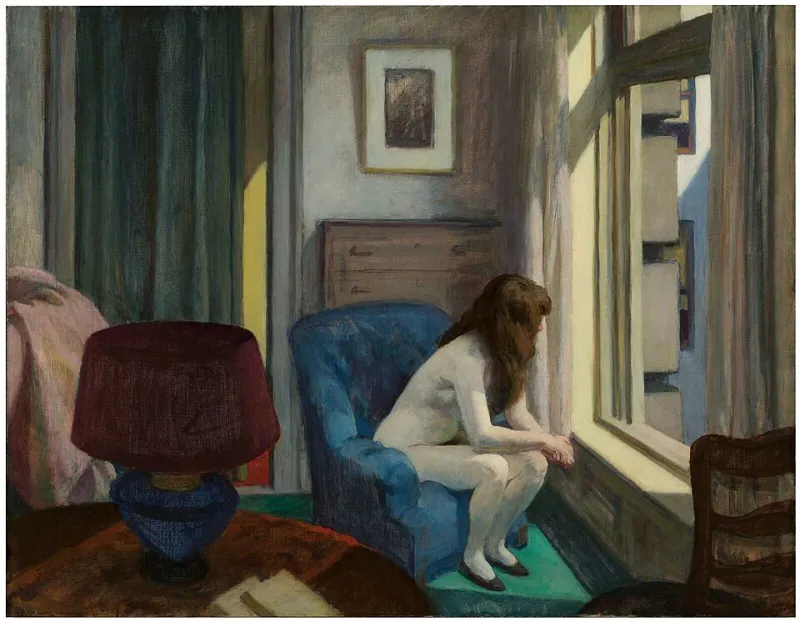
Photo: Edward Hopper, Public domain, via Wikimedia Commons
There's a moment most creatives know but rarely talk about out loud. You're sitting in front of a blank canvas, an empty document, or a half-finished design—and instead of feeling that familiar pull of excitement, you feel dread. Not writer's block, not laziness. Just a flat, heavy dread that sits in your chest like a stone.
That's the gray area nobody warned you about when you decided to make your passion your livelihood.
I've been there more times than I'd like to admit. And if you're reading this, chances are you have too.
The Paradox Nobody Puts on Their Vision Board
Here's the thing about turning your art into your career: it works, until it doesn't. You spend years building toward the dream—freelance clients, commissions, a growing audience, maybe even a course or a product line. And then one day you wake up and realize you haven't made something just for yourself in months. Maybe longer.
The creativity that once felt like breathing starts to feel transactional. Every idea gets filtered through a mental checklist: Will this perform? Does this fit my brand? Is this what my audience expects? The spontaneity gets squeezed out, and what's left is a kind of mechanical output that looks like your work but doesn't feel like it.
Psychologists call this phenomenon a shift from intrinsic to extrinsic motivation—when the internal reward of creating gets replaced by external pressures like income, engagement, and validation. And once that shift happens, burnout isn't far behind.
It's Not a Personality Flaw. It's a System Problem.
One of the cruelest parts of creative burnout is how personal it feels. You start to wonder if you've lost your talent, your edge, your thing. You compare yourself to other creators who seem endlessly prolific and enthusiastic, and you quietly wonder what's wrong with you.
But here's a reframe worth sitting with: creative burnout is largely a structural problem, not a personal one.
The gig economy, the pressure of social media consistency, the expectation that artists should be grateful to monetize at all—these are systemic forces that wear people down. The starving artist myth has been replaced by the hustle artist myth, and it's arguably just as damaging. Now you're supposed to be both deeply authentic and relentlessly productive. Vulnerable and on-brand. Expressive and market-aware.
That's an enormous amount of cognitive and emotional weight to carry while also trying to make something beautiful.
What Burnout Actually Looks Like in the Creative World
Burnout doesn't always look like collapsing. Sometimes it's subtler—and that's what makes it sneaky.
It looks like finishing a project and feeling nothing. Not relief, not pride, just... nothing.
It looks like scrolling through other people's work and feeling resentment instead of inspiration.
It looks like starting something new every few days but never finishing, because finishing means putting it out there, and putting it out there means judgment.
It looks like canceling creative plans with yourself—skipping the studio session, closing the laptop before you've written a word—because the thought of trying and falling short feels worse than not trying at all.
If any of that sounds familiar, you're not broken. You're just running on empty.
Finding Your Way Back Without Burning It All Down
The advice you usually get here is "take a break," which is true but incomplete. A week off doesn't fix a system that will still be waiting for you when you get back. What actually helps is more nuanced.
Separate your personal practice from your professional output. This is maybe the most important thing. Designate some portion of your creative time—even just 30 minutes a week—as completely off-limits to monetization or sharing. Make things that will never be seen. Bad things, weird things, unfinished things. Let yourself be a beginner again in your own craft.
Audit your commitments ruthlessly. Not every opportunity is worth the energy it costs. Say no to the projects that pay okay but drain you completely. Say yes to the ones that scare you in a good way. The distinction between productive discomfort and soul-crushing obligation is real, and learning to tell the difference is a skill worth developing.
Talk to other creatives honestly. Not the highlight-reel version of creative life, but the real version. Find your people—online, locally, wherever—who will tell you the truth about their own struggles. There is enormous relief in realizing you're not uniquely failing.
Lower the stakes on your personal work. A lot of creative anxiety comes from treating every piece like it needs to be your best work ever. It doesn't. Most of the time, making something mediocre is infinitely better than making nothing at all.
The Gray Area Is Where the Real Work Happens
Here's what I've come to believe after years of navigating this: the tension between art and commerce, between authenticity and audience, between rest and productivity—that tension never fully goes away. You don't solve it. You learn to live inside it with a little more grace.
The gray area of a creative career isn't a problem to be fixed. It's the actual terrain. And the people who sustain long, meaningful creative lives aren't the ones who figured out how to eliminate the uncertainty—they're the ones who stopped expecting it to disappear.
Your art is still yours, even when it's also your livelihood. Even when it's hard. Even when it doesn't feel like it right now.
Give yourself permission to find your way back to it slowly. There's no timeline on rediscovering why you started.