Your Weirdness Is Worth Money: The Case for Leaning Into Who You Actually Are

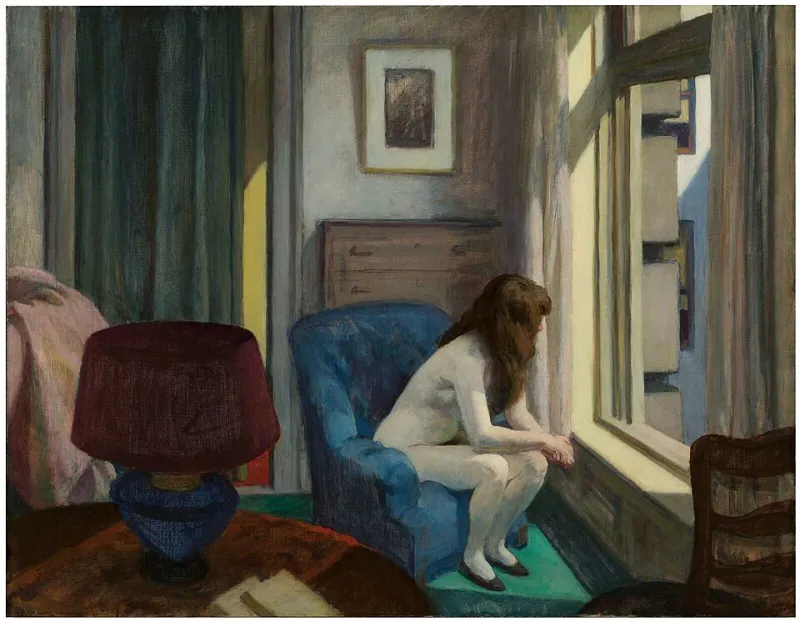
Photo: Unknown photographer, Public domain, via Wikimedia Commons
For a long time, the unspoken rule in creative industries was simple: polish everything. Smooth out the rough edges, mirror what's already working, and present the most universally appealing version of yourself you could manage. The internet made that pressure even louder. Suddenly you weren't just competing with people in your city — you were up against everyone, everywhere, all the time.
But something interesting has happened over the last few years. That polished, optimized, perfectly curated version of a creator? It's starting to bore people. Like, genuinely bore them. And the creators who are quietly building the most loyal, sustainable followings? They're the ones who never quite fit the mold in the first place.
The Shift Nobody Really Announced
There wasn't a press release about this. No industry conference officially declared that authenticity was now a competitive advantage. It just sort of... happened. Audiences got smarter, or maybe just more exhausted by the alternative. After years of consuming content that felt like it was engineered in a lab to hit every demographic checkbox, people started gravitating toward voices that felt real — even if real meant imperfect, niche, or a little strange.
You can see this play out across industries. In the book world, authors who write with a deeply personal, specific perspective — the ones who aren't trying to appeal to every reader — consistently build more dedicated fanbases than those chasing broad commercial appeal. In music, artists who lean into sounds and aesthetics that feel genuinely theirs, even when those sounds are hard to categorize, tend to develop the kind of listener loyalty that streaming numbers can't fully capture. In visual art and design, the creators who have a recognizable, idiosyncratic style — even a polarizing one — get remembered. The generically competent ones don't.
This isn't just vibes. There's actual psychology behind it.
Why Our Brains Trust the Imperfect
Research in social psychology has long pointed to something called the pratfall effect — the idea that people find competent individuals more likable when they make small, human mistakes. The same logic applies to creative work. When someone's art or writing or content feels too smooth, too calculated, our instincts quietly flag it. We sense the performance. And once we sense the performance, we stop trusting the performer.
Contrast that with a creator who shows their actual thought process, references their specific background, makes jokes that not everyone will get, or shares work that's clearly in conversation with their real life. That stuff creates what researchers call parasocial connection — the feeling that you actually know someone, even if you've never met them. And parasocial connection is, frankly, one of the most powerful forces in the modern attention economy.
People don't just buy products or content from creators they feel connected to. They become advocates. They stick around when the algorithm stops promoting you. They tell their friends.
What 'Leaning In' Actually Looks Like
Here's where it gets practical, because 'just be yourself' is the kind of advice that sounds great and means almost nothing without context.
Leaning into your authentic perspective doesn't mean oversharing, performing vulnerability, or abandoning craft. It means identifying the specific things about your point of view that feel genuinely yours — even the parts that might alienate some people — and making those things more visible in your work, not less.
Maybe you're a graphic designer who's obsessed with 1970s paperback cover art in a field dominated by minimalist aesthetics. Maybe you're a photographer who grew up in a small Midwestern town and that sensibility shows up in everything you shoot, even when you're working in a major city. Maybe your writing voice has a rhythm that doesn't quite match the clean, punchy style that most content guides recommend. These aren't liabilities. They're differentiators.
The creators who've figured this out aren't necessarily the loudest or the most followed. But they tend to be the ones still working five years from now, doing projects they care about, with clients or audiences who sought them out specifically because of what makes them distinct.
The Courage Part (Because There Is One)
Let's be honest about something: this is easier to say than to do. Putting your actual perspective into your work means risking that some people won't connect with it. And in a culture that quantifies everything — likes, followers, shares, conversion rates — it can feel genuinely scary to make choices that might hurt your numbers in the short term.
But here's the thing about building on authenticity versus building on trend-chasing: one of those foundations is stable and one of them isn't. Trends shift constantly. What the algorithm rewards today it ignores tomorrow. Your actual perspective, your real history, your genuine aesthetic instincts — those don't expire. They compound.
The most sustainable creative careers I've watched develop over time share one common thread: the person at the center of them stopped trying to be the best version of what already existed and started figuring out what only they could make. That transition is almost never smooth. It's usually a little awkward and uncomfortable before it starts to feel like solid ground.
But it does start to feel like solid ground.
Your weirdness isn't the thing standing between you and a viable creative career. For a lot of people, it's the actual path there.