Nobody's Coming to Give You the Green Light
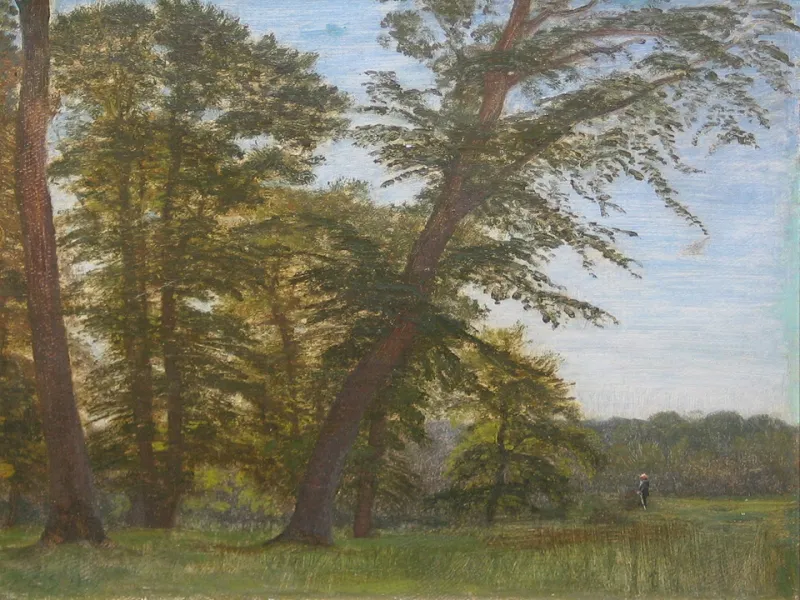
Photo: P. C. Skovgaard, Public domain, via Wikimedia Commons
The Email You Keep Drafting in Your Head
You know the one. The pitch to the gallery owner. The DM to the photographer you admire. The application to the residency program you've been "almost" ready for since 2021. You've rewritten it forty times in your mind and still haven't sent it, because somewhere in the back of your brain, a voice keeps whispering: who said you could do this?
That voice is the permission trap. And if you're a creative person — an artist, a writer, a designer, a maker of literally anything — there's a good chance it's been quietly managing your career without your consent.
This isn't about confidence in the self-help sense. It's about something more specific: the unconscious habit of outsourcing your creative timeline to other people. Gatekeepers. Mentors. Audiences. That one friend whose opinion you trust way too much. We tell ourselves we're being strategic or humble or just "doing our research." But a lot of the time? We're just waiting for permission.
Where This Actually Comes From
The permission-seeking behavior most creatives wrestle with isn't random — it has roots. For many of us, it goes back to school, where someone in authority decided whether your work was good or not. You raised your hand before you spoke. You submitted your essay and waited for a grade. Creativity, in that context, was always evaluated by someone else before it was validated.
Then we grow up and enter industries where gatekeepers seem to matter enormously. Record labels. Literary agents. Gallery curators. Hiring managers at the agencies we want to work for. The cultural message is clear: the right person has to say yes before your thing is real.
Psychologists call the underlying mechanism "external locus of control" — the belief that outcomes in your life are determined by forces outside yourself. When it bleeds into your creative practice, it can paralyze you in ways that look a lot like procrastination but feel more like waiting. Waiting for the right moment. The right feedback. The right amount of followers before you launch.
The problem is the wait never officially ends. There's always another milestone that feels more legitimate, another person whose blessing would really seal the deal.
People Who Didn't Wait
Here's the thing about some of the most recognizable creative careers of the last couple decades: they were built on a refusal to wait.
Karl Ove Knausgård wrote My Struggle — a six-volume autobiographical novel — without a clear sense that anyone would publish it, let alone that it would become one of the most talked-about literary works of the 21st century. He just wrote it.
Daniel Clowes self-published comics before anyone called him a graphic novelist worth paying attention to. Issa Rae made web series about the awkward Black girl experience she wanted to see before HBO came knocking. Chance the Rapper gave his music away for free and built a fanbase that eventually made him one of the most Grammy-awarded independent artists in history.
None of these people had a gatekeeper's blessing when they started. They created the thing, put it into the world, and let the work do the asking.
This isn't about recklessness or skipping the craft. All of those people worked obsessively on their output. But they didn't hold the work hostage while they waited for someone to say it was okay to begin.
The Sneaky Ways the Trap Shows Up
The permission trap is tricky because it rarely announces itself. It disguises itself as responsibility. Practicality. Humility. Here are a few of its favorite costumes:
"I just need a little more experience first." Experience is valuable. But this phrase can also be a holding pattern with no finish line. More experience than what? Enough for whom?
"I want to get some feedback before I launch." Feedback has its place. But endlessly workshopping something that's already ready is often just fear with a polite name.
"I'm going to apply once I have a stronger portfolio." The stronger portfolio gets built by doing the things you're not applying for yet. See the problem?
"I want to wait until I have more followers." The followers often come after you've made the thing, not before.
What Moving Forward Actually Looks Like
Getting out of the permission trap doesn't mean ignoring feedback or burning bridges with people whose opinions matter. It means changing the sequence. You create first. Then you refine, share, and seek input — not as a prerequisite for starting, but as a response to something that already exists.
A few things that actually help:
Set a ship date and treat it like a client deadline. External deadlines work because they externalize the pressure. Create your own. Tell a friend. Put it on the calendar. Make it real.
Ask yourself: what's the smallest version of this I can release? You don't have to launch the whole thing. A chapter. A reel. A prototype. A Substack post. Starting small breaks the permission loop without requiring a grand announcement.
Notice whose approval you're actually seeking. Sometimes it's a specific person — a parent, a former teacher, an industry figure you respect. Naming it takes some of its power away. Their approval would feel good. It is not required.
Reframe 'ready' as a myth. Nothing creative is ever fully ready. The work ships when you decide it ships. That decision is yours.
You Already Have the Permission
Here's the part nobody tells you clearly enough: there's no committee. There's no licensing board for creativity. Nobody is going to show up at your door with a certificate that says you're officially allowed to make your work and share it with the world.
The green light you're waiting for? You have to be the one who flips it.
That's not a motivational poster sentiment — it's just the actual mechanics of how creative careers get built. You decide to begin. You do the work. You put it out. And then, maybe, the validation you were waiting for shows up — not as a prerequisite, but as a reward.
Stop waiting. The timeline is yours.