Stop Measuring Your Art Against Someone Else's Ruler
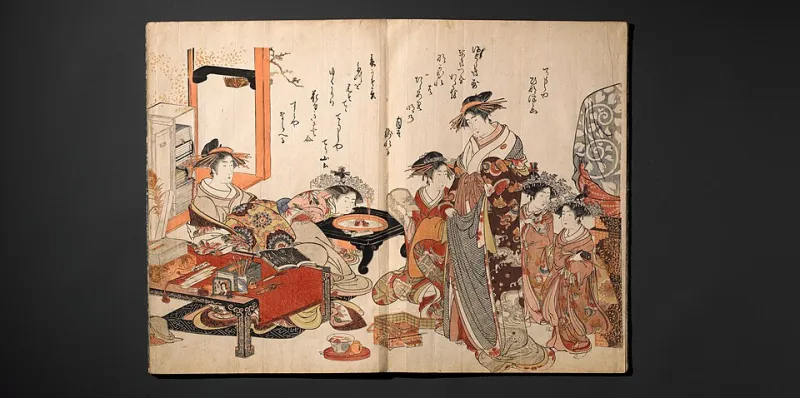
Photo: Santō Kyōden, CC0, via Wikimedia Commons
The Feed Is Lying to You
Here's something nobody says out loud enough: the creative work you see thriving on Instagram, Behance, Pinterest, or wherever you're currently doom-scrolling is not a neutral sample of what's good. It's a curated slice of what the algorithm decided to reward this week. And algorithms are not art critics. They're traffic cops.
Yet most of us — myself included, at various low points — have sat with our own work and thought, why doesn't this look like that? We zoom in on someone else's color palette, their grid aesthetic, the way their portfolio flows, the confident tone of their artist statement, and we start quietly dismantling what we've built to make room for something that looks more like theirs.
That's the comparison trap. And it's sneakier than it sounds.
Why We Do This (No Shame Here)
Let's be honest about where this comes from, because it's not weakness — it's wiring. Human beings are deeply social. We've always looked to the group to understand what's valuable, what's safe, what belongs. Applying that instinct to creative work is almost automatic.
Add social media into the mix and you've got a machine specifically designed to surface content that's already performing well, which means you're constantly being shown work that has already been validated by a crowd. You're not seeing the full landscape of what's being made. You're seeing the highlight reel of what already won.
That creates a false hierarchy. It makes certain aesthetics look like the standard when they're actually just the trend. And trends, by definition, have a shelf life.
The psychological toll is real. Researchers have consistently found that social comparison — especially upward comparison, where you're measuring yourself against people who seem further ahead — tanks motivation, increases anxiety, and chips away at creative confidence. You start second-guessing decisions you were totally fine with before you opened the app. You start editing your instincts out of your work.
And here's the cruel irony: the more you sand down your edges to fit in, the less interesting your work becomes. The thing people actually connect with is the part that feels specific, a little strange, unmistakably you.
Finding Your Creative Fingerprint
So how do you figure out what yours actually is — especially if you've spent a while chasing other people's aesthetics?
Go back to what you made before you had an audience. Dig up old sketchbooks, early projects, stuff you made in college or high school or whenever you were creating purely for yourself. What kept showing up? What themes, visual choices, or obsessions were you returning to before anyone was watching? That's data.
Pay attention to what you're drawn to outside your medium. If you're a graphic designer, what movies do you love? What does your apartment look like? What kind of music do you put on when you're actually relaxed? Creative fingerprints don't live only in the work — they live in your whole sensibility. The way you arrange things. The stories you find interesting. The colors that make you feel something.
Notice what feels forced versus what flows. When you're working in a style that isn't really yours, there's a particular kind of friction. It's not the productive struggle of trying something hard — it's the dull grind of trying to be someone else. Learn to tell those two feelings apart. One is growth. The other is performance.
Ask people who know your work well — not followers, but friends. Ask them what they'd recognize as distinctly yours if they saw it without your name on it. Their answers might surprise you.
Practical Ways to Tune Out the Noise
Knowing the comparison trap exists doesn't make you immune to it. You need actual habits, not just awareness.
Batch your consumption, don't mainline it. Instead of casually scrolling through other people's work all day, set specific windows — maybe thirty minutes in the evening — for looking at what others are making. Keep it separate from your creation time. What you look at right before you sit down to work shapes what comes out.
Curate aggressively. Unfollow or mute anyone whose work consistently makes you feel smaller rather than inspired. This isn't petty — it's maintenance. There's a difference between work that challenges you in a good way and work that just makes you feel behind. You're allowed to know the difference.
Create something just for you, regularly. Not for a client, not for a post, not for a portfolio update. Something with zero audience. This keeps your creative instincts sharp and reminds you that making things is intrinsically worth doing, separate from how it lands.
Collect references outside your industry. If you're a photographer, stop only looking at photography. Look at architecture, textile design, film stills, old maps. Cross-pollinating your references makes your work harder to copy and more distinctly yours.
Your Weird Specific Thing Is the Point
There's a version of success that looks like being the most polished, most on-trend, most algorithm-optimized version of a creative person. And sure, that might get you followers. It might even get you clients in the short term.
But the creatives who build something that actually lasts — the ones whose work you can recognize before you see their name — got there by going deeper into themselves, not by widening to cover more ground. They made the specific thing only they could make, and they made it over and over until people started to see it.
Your creative fingerprint is not a liability. It's not the rough draft you need to smooth out before you're ready to be taken seriously. It's the whole point.
Stop measuring your work against someone else's ruler. You're not building what they're building. You're building something that didn't exist before you started making it — and that's worth more than any aesthetic trend that's going to look dated in eighteen months.
Trust the weird specific thing. It's the only thing that's actually yours.