Your Best Ideas Are Dying While You're Too Busy Making Stuff
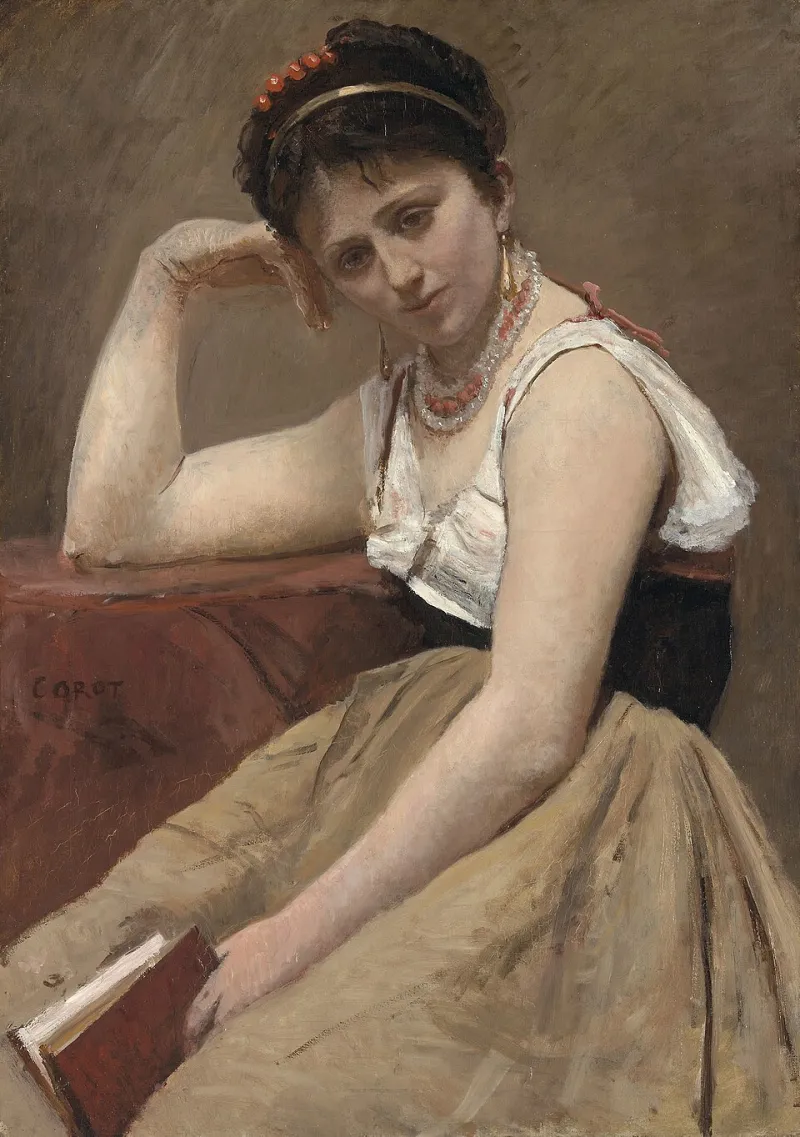
Photo: Jean-Baptiste Camille Corot, Public domain, via Wikimedia Commons
There's a version of creative success that looks great on the outside and feels weirdly hollow on the inside. You're shipping work. You're hitting deadlines. Your output is consistent, your process is tight, and if someone asked you how things were going, you'd probably say busy — which, in the creative world, is usually code for fine but also kind of empty in a way I can't fully explain.
The paradox nobody warns you about: the more productive you get, the more you can start to feel creatively broke.
This isn't burnout, exactly. It's something more specific. It's what happens when execution mode becomes your permanent setting and generative mode — the wandering, wondering, what-if-I-tried-this mode — gets crowded out entirely. The ideas don't stop coming. They just stop getting through.
Two Modes, One Brain, Not Enough Time
Your creative brain essentially operates in two different gears, and they don't run well simultaneously.
Execution mode is focused, goal-oriented, and efficient. It's where you live when you're on deadline, when you're in production, when you're taking a project from concept to completion. It's enormously useful. It's also kind of narrow. In execution mode, your brain is filtering aggressively — keeping what's relevant, discarding what isn't, moving toward the finish line.
Generative mode is almost the opposite. It's loose, associative, and a little unruly. It's where the weird connections happen, where something you saw on a walk somehow solves a creative problem you've been sitting with for weeks, where ideas arrive sideways instead of head-on. It needs space, boredom, and a certain amount of aimlessness to actually function.
The problem is that most creative professionals, especially those building something independently, spend the vast majority of their time in execution mode. There's always a next thing. A client deliverable, a content schedule, a project that's been waiting. The generative space keeps getting bumped.
And over time, the ideas that needed that space to develop just... don't.
The Graveyard Nobody Talks About
Every creative person has one. It's not a folder of abandoned projects or a list of things you started and quit. It's more invisible than that.
It's the ideas that never even made it to a draft. The concepts that surfaced for a moment during a shower or a long drive, flickered briefly, and then disappeared because you were too deep in something else to catch them. The creative directions you sensed were interesting but never had the bandwidth to explore. The experiments you meant to run when things slowed down — which they never quite did.
That's the graveyard. And unlike the work you started and stopped, you'll never even know what's buried there.
This is the real cost of living permanently in execution mode. Not just fatigue or creative sameness — though those happen too — but the accumulated loss of what might have been the most interesting work you ever made, if only you'd had room to let it breathe.
Why Rest Isn't Laziness (and Boredom Is Actually Doing Something)
The research on this is pretty consistent, even if it runs against every productivity instinct you have: your brain does some of its most important creative processing when it's not actively working on anything.
The default mode network — the part of your brain that activates during rest, daydreaming, and mind-wandering — is deeply involved in creative insight, pattern recognition, and the kind of associative thinking that leads to genuinely original ideas. When you fill every gap in your schedule with tasks, you're not just being efficient. You're also cutting off one of your main creative inputs.
Boredom, specifically, has a way of forcing the brain to generate its own stimulation. And what it tends to generate, when given the chance, is ideas. Not always good ones. But sometimes the kind that shift the whole direction of your work.
The irony is that the creative people who look the most productive from the outside — the ones always shipping, always posting, always in the middle of something — are sometimes the ones most starved of the conditions that make their best work possible.
Protecting the Unscheduled Space
This isn't an argument for doing less. It's an argument for doing differently — specifically, for treating generative time as a legitimate part of your creative practice instead of a luxury you'll get to eventually.
A few things that actually help:
Schedule white space and defend it like a client deadline. Seriously. If it doesn't go on the calendar, it doesn't happen. Even an hour a week of unstructured creative time — no agenda, no output required — is worth protecting.
Create an idea capture habit that's low-friction enough to actually use. The ideas that surface in generative mode are fragile. A notes app, a voice memo, a paper notebook — whatever you'll actually reach for in the moment. The goal is to catch them before execution mode swallows them.
Let some projects stay in the experimental phase longer than feels comfortable. Not everything needs to be finished. Some things need to be played with. The pressure to turn every idea into a deliverable is part of what kills the ideation process.
Build in transitions between modes. Going straight from a packed execution day into trying to brainstorm something new usually doesn't work. Give yourself a buffer — a walk, a meal without a screen, something deliberately low-stimulation — before you expect your generative brain to show up.
The Work That Hasn't Happened Yet
The most interesting thing you'll ever make probably isn't on your current project list. It's somewhere in the undeveloped space between your last idea and the one you haven't had room to find yet.
That's not a reason to stop executing. It's a reason to make sure execution isn't all you're doing.
Protect the mess. Protect the wandering. Protect the afternoons that don't produce anything you can show anyone. That's where the work that actually matters tends to come from.