The Art You Make When No One Is Looking Is the Art That Actually Keeps You Alive
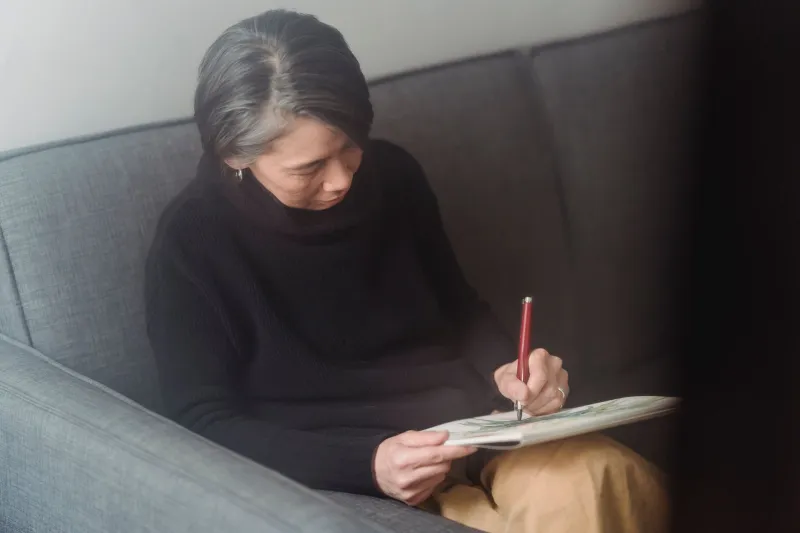
There's a sketchbook I keep in my nightstand that nobody has ever seen. Not my closest friends, not people who follow my work online, not anyone. The drawings in it are messy and half-finished and sometimes completely incoherent. And honestly? It's the most honest creative work I've ever done.
We live in a moment where the instinct to share is almost reflexive. You finish something, you post it. You start something, you document it. The line between creating and broadcasting has gotten so blurry that a lot of us have quietly forgotten what it feels like to make something with zero intention of showing it to anyone. And I think that forgetting is costing us more than we realize.
When Sharing Became the Default
It didn't happen overnight. Social media didn't suddenly flip a switch and make us all desperate for validation. It was gradual — a slow rewiring of what felt like the natural endpoint of creative work.
First you made things. Then you made things and showed people. Then you started making things because you were going to show people. And somewhere in that progression, the private creative act started to feel almost pointless. Like a tree falling in a forest with no one around. Like effort that doesn't count.
But here's the thing: that feeling is a lie. A really convincing, culturally reinforced lie — but a lie nonetheless.
The pressure to share everything has introduced a kind of audience-consciousness that follows you even when you're alone at your desk. You start editing before you've even begun. You think about how something will look in a grid before you've figured out what you actually want to say. You shape your work around imagined reactions instead of real impulses. And slowly, the work gets flatter. Safer. More legible to strangers and less meaningful to you.
The Specific Freedom of Making Something Uncapturable
There's a particular kind of creative freedom that only exists when you're genuinely not making something for an audience. It's not just about privacy — it's about permission. Permission to be confused. Permission to try something that might be terrible. Permission to follow a thread just because it interests you, not because it fits any narrative you've been building publicly.
Some of the most interesting creative breakthroughs I've ever had came from work that was never meant to go anywhere. A journal entry that cracked open something I'd been circling for months. A playlist made for a road trip with nobody else in the car. A half-hour spent messing around with watercolors on a random Tuesday with no goal except to see what happened.
None of that is in my portfolio. None of it has a caption or a hashtag. And yet all of it fed directly into work that does exist publicly — work that has more depth and texture because of what happened in private.
Private creative work is infrastructure. You just can't see it from the outside.
What We Lose When Everything Has to Perform
When your creative practice becomes entirely public-facing, a few things start to quietly disappear.
First, you lose the ability to be bad at something without consequence. Learning requires failure, and failure is a lot harder to stomach when it's happening in front of people. So you stop experimenting. You stick to what already works. Your range shrinks.
Second, you lose access to the parts of yourself that don't have an audience-friendly story yet. The stuff that's still forming. The ideas that are too weird or too raw or too personal to package. That material is often the most creatively alive thing you have — and if you're only making work that's ready to be seen, you never get to touch it.
Third, and maybe most importantly, you lose the intrinsic motivation that got you into this in the first place. That pure, uncomplicated love of making something. The thing that existed before anyone was watching. When every creative act becomes content, the joy has a tendency to quietly drain out of it.
Protecting the Private Studio
I've started thinking of my private creative practice as a separate space — almost like a room in my head that doesn't have windows. Nothing that happens in there is for anyone else. It's not a draft waiting to be published. It's not research for a future project. It just exists.
If you don't have something like that right now, it might be worth building one. It doesn't have to be elaborate. A notebook you never photograph. A playlist you never share. A folder on your desktop called something boring so you never feel the urge to open it in front of anyone. A thirty-minute walk where you think about a creative problem with no plan to document the thinking.
The point isn't secrecy for its own sake. The point is creating a space where the work doesn't have to justify itself to anyone. Where you can be genuinely exploratory without the weight of performance hovering over every choice.
The Work That Holds You Together
Here's what I've noticed: the artists and creative people I most admire — the ones who've been doing this for decades and still seem genuinely lit up by their work — almost all have some version of a private practice. Something they do just for themselves. Something that exists outside the economy of attention.
It's not a coincidence. That private creative space is often what keeps them connected to why they started making things in the first place. It's where they go to remember that the work matters independent of whether anyone sees it.
In a world that monetizes attention and quantifies engagement, choosing to make something that will never be measured is almost a radical act. It's a way of insisting that your creativity belongs to you first — before it belongs to an algorithm, an audience, or a brand.
The sketchbook in my nightstand isn't going anywhere. And honestly, some of the best work I'll ever do is probably going to stay right there in those pages, unseen and completely whole.
That's not a failure. That's the whole point.