What to Do With All the Old Stuff You Made: Revive, Remix, or Release It
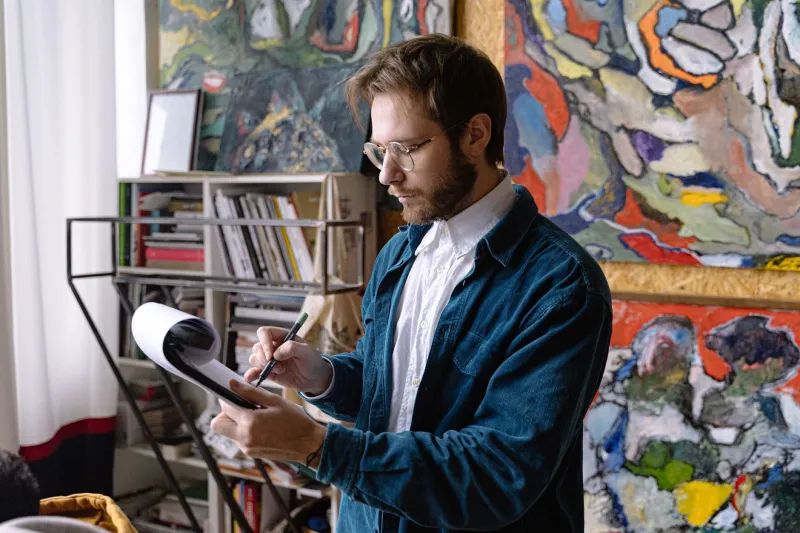
Somewhere on your hard drive — or maybe in a physical box if you're that kind of person — there's a graveyard. Old sketches, abandoned drafts, half-edited photos, a project you were this close to finishing back in 2019 before life happened. You've probably scrolled past it a hundred times and felt that familiar mix of nostalgia, guilt, and mild embarrassment.
Here's the thing though: that archive isn't a failure museum. It's raw material. The question isn't whether old work has value — it almost always does in some form. The real question is figuring out what kind of value it holds and what you're actually supposed to do with it.
Because not everything deserves a revival. And not everything deserves to stay buried.
The Emotional Baggage That Comes With Old Work
Before you even get into the practical stuff, it's worth acknowledging that revisiting old creative work is rarely just a neutral organizational exercise. There's a whole emotional layer sitting on top of it.
Some pieces feel cringe-worthy now because you've genuinely grown. Others feel unfinished in a way that still stings — like a conversation you never got to finish. Some feel fine, actually, and that's almost more confusing because you don't know why you stopped.
The trap most people fall into is letting that emotional static make the decision for them. They either avoid the archive entirely (too uncomfortable) or they cling to everything (too sentimental to let anything go). Neither approach is particularly useful.
Try to separate how the work makes you feel from what the work actually is. That's easier said than done, but it's the starting point.
Signs Something Is Worth Reviving As-Is
Sometimes old work holds up. Like, genuinely holds up — not just in a "this was good for where I was" way, but in a "this is still good, full stop" way.
You'll know it when you encounter it. There's a moment of surprised recognition, like running into someone you used to know and realizing they're still exactly who you remembered, maybe even better.
Work worth reviving as-is usually hits a few marks: it solves a real problem or speaks to something people are still dealing with, it doesn't feel dated in a way that undermines its core message, and it was never actually finished — or was finished but never properly shared.
That last one is huge. A lot of creative work gets abandoned not because it wasn't good, but because the timing was off, the platform didn't exist yet, or you were too nervous to put it out. That's not a quality problem. That's a distribution problem. And distribution problems are fixable.
If you made something solid that just never found its audience, giving it another shot with fresh context — a new caption, a better presentation, a different platform — isn't cheating. It's just smarter the second time around.
When Remixing Is the Move
Most old work doesn't need to be resurrected exactly as it was. It needs to be mined.
Think of your back catalog less like a finished product and more like a quarry. The raw material is in there. The shape it takes now might look completely different from what you originally made — and that's fine. That's actually the point.
Remixing means taking the core idea, the original insight, the thing that made you excited enough to start in the first place, and running it through who you are now. You've changed. Your skills have changed. Your perspective has changed. The work gets to change too.
This is how a lot of successful creators keep going without constantly generating ideas from scratch. They're not being lazy — they're being efficient in the most creative sense of the word. A blog post becomes a video. A video becomes a short. A short becomes a workshop. An old illustration gets reworked into a print. The idea evolves, the format shifts, the audience grows.
The key is that you're not just recycling. You're genuinely adding something — a new frame, a newer voice, a context that didn't exist when you first made the thing.
How Unfinished Work Blocks New Creation
This one doesn't get talked about enough: there's a real cognitive and creative cost to carrying around a pile of unfinished projects.
Every piece of work you've started and not resolved — whether that means finishing it, releasing it, remixing it, or consciously deciding to archive it — takes up mental real estate. It's the creative equivalent of having forty browser tabs open. Technically functional, but not exactly running smoothly.
Unfinished work creates a kind of low-level guilt that's surprisingly draining. It's not the dramatic burnout people write articles about. It's quieter than that — more like a persistent hum in the background that makes it harder to fully commit to what you're working on now.
The fix isn't to power through and finish everything. That's exhausting and probably not realistic. The fix is to make a decision about each thing. Finish it, release it, remix it, or officially retire it. Any of those options closes the loop. It's the indecision that's the problem, not the unfinished state itself.
Knowing When to Let Something Go
Not everything in your archive deserves a second life. Some things really do belong in permanent retirement, and being honest about that is its own kind of creative maturity.
Work that belongs in the archive — not the trash, just the archive — usually falls into a few categories. It was genuinely a learning exercise and the lesson has already been absorbed. It represents a version of you that no longer exists in a way that would require misrepresenting yourself to share it now. Or it was made for a specific context that's long past and can't be meaningfully updated.
Letting something go doesn't mean it was a waste. Everything you made taught you something, even if the only lesson was what you didn't want to do again. You don't have to display every piece of that education publicly.
The goal isn't to squeeze value out of every single thing you've ever created. The goal is to make honest decisions about what still has life in it — and to stop letting the rest of it weigh you down.
Building the Habit of Checking In
The most practical thing you can do is create a regular check-in with your own archive. Not an obsessive audit, just a scheduled revisit — maybe once a quarter, maybe twice a year — where you actually look at what's in there with fresh eyes.
Bring some distance to it. Work you made six months ago will read differently than it did when you were in the middle of it. Sometimes you'll cringe. Sometimes you'll be pleasantly surprised. Either reaction is useful information.
Over time, you start to develop a feel for your own patterns — the types of ideas that tend to have longer legs, the projects that stall for the same reasons repeatedly, the work that consistently surprises you when you return to it. That self-knowledge is genuinely valuable. It helps you make better decisions going forward, both about what to archive and what to actually finish.
Your old work isn't a burden you're stuck carrying. It's a resource — one that gets more interesting the more intentional you are about how you use it.